
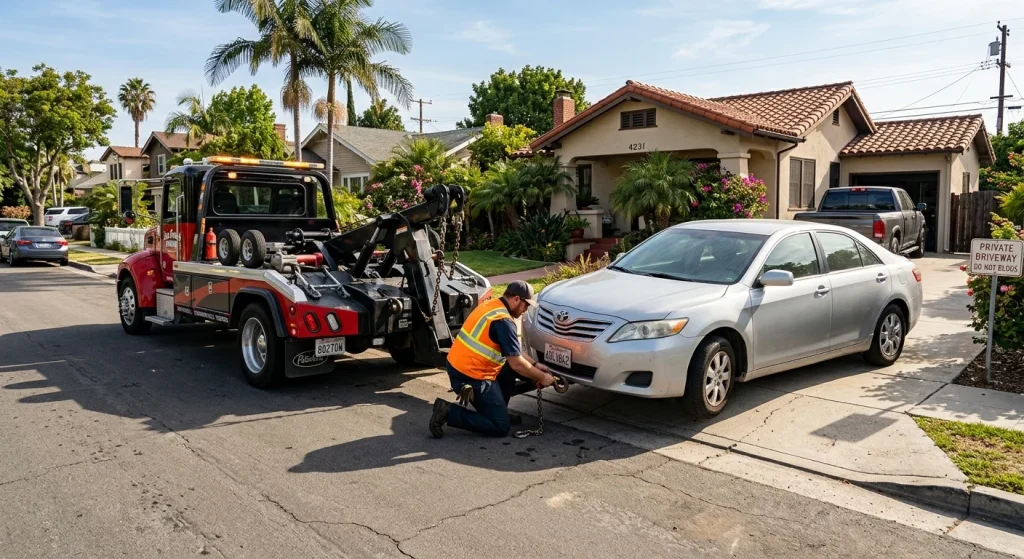
Parking violations look simple until signs, curb restrictions, permits, temporary rules, and towing regulations overlap. Most parking rules are established and enforced through state or local law, so the same parking behavior can be treated differently from one city to another. Drivers should read the entire sign sequence and check local ordinances before assuming a space is legal.
How Are Parking Restrictions Communicated?
Parking restrictions may appear through signs, meters, curb markings, pavement markings, permit notices, or jurisdiction-wide rules. A sign may limit parking by time, day, vehicle type, activity, or location.
The Federal Highway Administration’s current MUTCD provides national standards for traffic-control devices and includes standardized parking, standing, stopping, and tow-away signs. current FHWA traffic-control standards
The MUTCD helps standardize traffic-control devices, but local law determines many actual parking restrictions and penalties.
What Are Common Parking Violations?
Frequent violations include exceeding a time limit, parking in a restricted zone, blocking an area that must remain clear, failing to follow street-cleaning rules, or using a permit space without authorization.
People using parking-rule research should remember that posted signs may apply only to a defined section of curb. Arrows, supplemental plaques, and nearby signs can change where one restriction ends and another begins.
Temporary restrictions for construction, emergencies, events, or snow operations can also override normal parking conditions.
When Can a Parking Violation Lead to Towing?
Towing rules vary widely. A vehicle may be subject to removal when local law authorizes towing from certain prohibited locations, posted tow-away zones, emergency routes, or other restricted areas.
General local ordinance background should be checked against the specific towing statute or municipal code because notice requirements, storage procedures, and owner remedies differ.
| Parking Issue | Possible Result | What to Review |
|---|---|---|
| Expired meter | Citation | Meter and local rules |
| Restricted curb | Ticket or towing | Signs and markings |
| Tow-away zone | Vehicle removal | Posted notice |
| Permit violation | Citation | Permit-zone rules |
What Should You Do After a Ticket or Tow?
Start with the citation or tow paperwork. It usually identifies the issuing authority, alleged violation, payment instructions, dispute process, and deadline.
Anyone reviewing enforcement consequence context should keep the legal process separate from frustration over the tow itself. Photographs of the vehicle location, curb, meter, and every nearby sign can become important if the restriction was unclear or incorrectly applied.
Obtain receipts for towing and storage charges and preserve any electronic parking-payment confirmation.
Where Parking Disputes Commonly Go Wrong
Ignoring a ticket because the driver believes it is unfair can make the problem more expensive. Administrative deadlines may continue running even when a person intends to challenge the citation later.
Another mistake is photographing only one sign. Parking restrictions can depend on arrows, neighboring signs, temporary notices, or the exact position of the vehicle. A wider set of photographs often provides much better context for reviewing what happened.
When Should You Get Legal Help?
Most parking tickets can be handled through the local administrative process. Legal help may become useful when a tow involves substantial property damage, repeated or escalating penalties, disputed ownership, disability-parking issues, seizure-related proceedings, or another legal dispute beyond an ordinary citation. Before seeking help, collect the ticket, tow authorization, photographs, payment records, and local hearing information.
Frequently Asked Questions
Can my car be towed without receiving a parking ticket first?
Sometimes. Local laws may authorize immediate towing from certain locations or under specified circumstances. Whether a separate citation is required depends on the jurisdiction and reason for removal.
Can I challenge a parking ticket because a sign was confusing?
You can generally use the applicable dispute process, but success depends on local law and the evidence. Clear photographs showing the complete sign arrangement can be useful.
Who sets parking fines in the United States?
Parking penalties are generally established through state or local laws and ordinances rather than one nationwide fine schedule. The issuing authority’s current rules should be checked.
Document the Space Before You Dispute the Charge
Parking enforcement depends heavily on location-specific facts. Read every sign before leaving the vehicle, keep proof of meter or app payments, and photograph the area promptly when a citation or tow appears questionable. If you plan to challenge the action, follow the stated deadline even while gathering additional information. Missing the review period can create a second problem on top of the original ticket.
This article is for general informational purposes and is not a substitute for legal advice from a qualified attorney in your jurisdiction.