
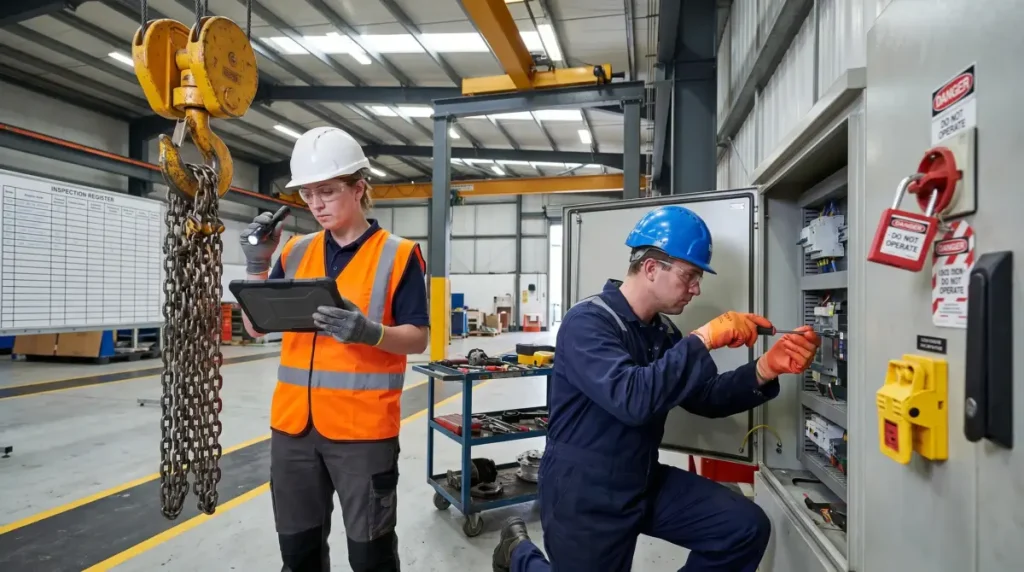
A factory inspection can involve much more than an inspector walking through a production area. Regulators may review equipment, conditions, injury records, written programs, employee practices, and other evidence connected to the purpose and lawful scope of the inspection.
For workplace safety, federal OSHA or an OSHA-approved state plan may have inspection authority depending on the location.
What Authority Does OSHA Have to Inspect?
Section 8 of the Occupational Safety and Health Act authorizes OSHA representatives, after presenting appropriate credentials, to enter covered workplaces at reasonable times and inspect within reasonable limits. The statute also permits examination of workplace conditions, machinery, equipment, and materials.
OSHA’s inspection regulation provides that compliance officers identify themselves, explain the inspection’s nature and purpose, and generally indicate its scope and requested records.
State-plan jurisdictions may follow their own enforcement procedures consistent with their approved programs.
Records Can Shape the Direction of an Inspection
Inspectors may review records relevant to workplace safety, including injury and illness documents and required program materials.
Managers may also follow regional information outlets for general developments, but an inspection response should be based on official agency requirements and the facility’s own records.
OSHA’s Field Operations Manual explains that an inspection can include workplace records and private employee interviews, and circumstances encountered during a partial inspection may lead the agency to consider expanding its scope.
Providing inaccurate or casually reconstructed records can create problems beyond the original hazard.
Employees and Employers Have Inspection Roles
Federal law provides opportunities for employer and employee representatives to accompany OSHA during the physical inspection. OSHA’s current worker walkaround rule also addresses circumstances in which employees may select a nonemployee representative who is reasonably necessary for an effective inspection.
General local digital reporting may describe regulatory activity, but workplace representatives should rely on the governing inspection rules rather than media summaries.
| Inspection Stage | Possible Activity | Management Focus |
|---|---|---|
| Opening | Credentials and scope discussion | Identify responsible contacts |
| Walkaround | Observe conditions | Avoid disrupting evidence |
| Record review | Examine required documents | Provide accurate records |
| Closing/post-inspection | Discuss issues or citations | Track deadlines |
Employee interviews may occur privately under OSHA inspection authority.
Citations Create Deadlines, Not Merely Recommendations
If OSHA believes a violation occurred, the OSH Act authorizes issuance of a written citation describing the alleged violation and setting a reasonable period for correction.
A company might see related discussion through regional news resources, but deadlines should be taken directly from the citation and governing OSHA procedures.
Under federal OSHA procedure, an employer generally has 15 working days after receipt of the notice to contest a citation or proposed penalty. Missing that period can cause the matter to become a final order.
Required abatement verification may also follow. OSHA regulations generally require certification of abatement within 10 calendar days after the applicable abatement date, subject to the regulation’s provisions.
What Factories Often Get Wrong During Inspections
One mistake is immediately changing the inspected area without first documenting conditions or considering evidence-preservation needs. Immediate dangers should be controlled, but significant alterations should be recorded carefully.
Another mistake is allowing several managers to give inconsistent answers because no inspection-response process exists.
Facilities also create risk when written programs look impressive but employees describe completely different practices. Inspectors evaluate workplace conditions, not only binders.
Preparation should focus on actual compliance rather than rehearsed appearances.
When Should Counsel or a Safety Professional Be Involved?
Prompt assistance may be useful after a fatality or serious injury, inspection involving significant alleged hazards, document dispute, expanded inspection, citation, large proposed penalty, or disagreement about an abatement requirement.
Because contest periods can be short, a citation should be reviewed as soon as it arrives. Management should identify each item, the alleged standard, proposed penalty, abatement date, available evidence, and whether corrective action is already underway.
Frequently Asked Questions
Can an OSHA inspector interview employees privately?
Yes. The OSH Act authorizes OSHA representatives to question employees privately as part of covered inspections and investigations.
Can a factory challenge an OSHA citation?
Yes. Under federal OSHA procedures, an employer may contest a citation, proposed penalty, or related matters by following the required procedure within the applicable deadline.
Does correcting a hazard automatically cancel a citation?
Not necessarily. Corrective action may satisfy an abatement obligation, but it does not automatically erase an issued citation or resolve questions concerning penalties or contest rights.
Treat the Inspection as a Legal Process
Factories should prepare for inspections by maintaining real compliance every day, assigning knowledgeable contacts, keeping required records accessible, and understanding how management and employee representatives participate.
If a citation arrives, calendar every deadline immediately and document corrective work carefully. The safest inspection strategy is not a perfect presentation; it is a workplace whose records and physical conditions tell the same story.
This article provides general legal information and is not a substitute for advice from a qualified attorney regarding a specific situation.